

The Michelin Guide Expands Beyond Athens
by K&M Creative • Reading time: 6–8 minutes
Book a strategy call • Join newsletter
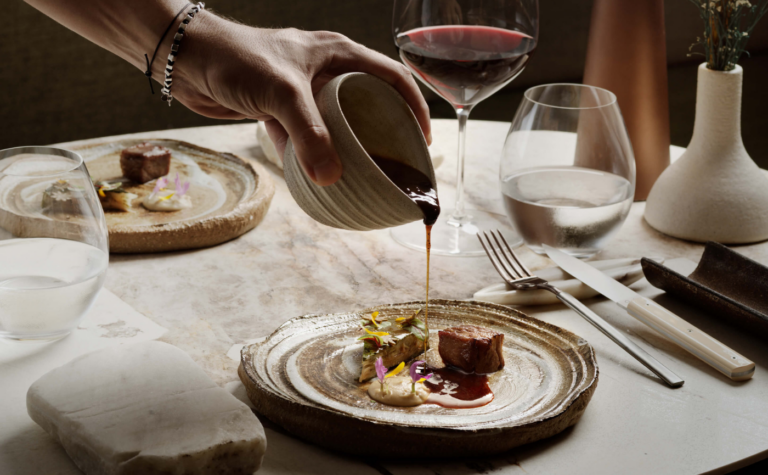
What Thessaloniki and Santorini Signal for Greek Gastronomy and Hospitality Marketing
For years, Michelin recognition in Greece was synonymous with Athens.
That narrative has now changed.
With the Michelin Guide officially expanding beyond the capital to include Thessaloniki and Santorini, Greece enters a new chapter where regional culinary identity, destination branding, and hospitality marketing converge on a global stage.
This is not merely a gastronomic update. It is a strategic signal.
Why Michelin Is Looking Beyond Athens
Michelin’s expansion is rarely accidental. It follows demand, maturity, and global relevance.
In Greece’s case, three factors have aligned:
- Culinary evolution beyond the capital, with regional cities reaching international standards.
- Increased global travel literacy, where visitors seek layered experiences, not single-city narratives.
- The strategic value of food as destination branding, particularly in competitive Mediterranean markets.
By extending recognition to Thessaloniki and Santorini, Michelin is effectively acknowledging that Greek gastronomy is no longer centralised. It is diverse, place-driven, and commercially significant.
Michelin’s move reinforces a broader destination branding shift: places are no longer marketed as locations, but as layered cultural experiences.
Thessaloniki: Greece’s Most Authentic Food Capital
If Athens refined Greek cuisine for the global stage, Thessaloniki preserved its soul.
Long regarded by insiders as Greece’s true gastronomic heart, the city’s culinary identity is shaped by:
- Byzantine, Ottoman, Balkan, and Sephardic influences
- A strong culture of everyday dining rather than occasion dining
- Deep respect for produce, technique, and tradition
Thessaloniki’s cuisine is not performative. It is lived.
From slow-cooked dishes and spice-layered recipes to bakeries, meze culture, and contemporary reinterpretations, the city offers Michelin what it increasingly values: authenticity with consistency.
For the Guide, Thessaloniki represents credibility.
For Greece, it represents balance.
Santorini: Beyond the View, Towards Culinary Substance
Santorini’s global reputation has long been visual.
Michelin’s recognition signals a strategic shift towards substance.
Over the past decade, the island’s gastronomy has evolved quietly but decisively:
- A renewed focus on local produce, shaped by volcanic soil
- Elevated interpretations of Cycladic cuisine
- International-level kitchens operating within high-pressure seasonal environments
Michelin’s move reframes Santorini not as a destination that merely hosts good restaurants, but as a place capable of sustaining culinary excellence.
This matters.
Because in luxury travel, perception often lags behind reality.
Why Michelin Stars Matter in Hospitality Marketing
From a marketing standpoint, Michelin stars function as third-party brand equity.
They influence:
- Destination credibility
- Hotel and restaurant positioning
- Pricing power and perceived value
- Media exposure and international visibility
Importantly, Michelin recognition does not only benefit restaurants.
It elevates entire ecosystems.
Hotels nearby experience stronger demand.
Destinations gain narrative depth.
Investors see reduced risk.
In a saturated luxury market, Michelin acts as a trust shortcut.
This aligns with broader luxury hospitality trends, where credibility, experience depth, and third-party validation increasingly drive decision-making.
The Commercial Impact Few Talk About
Beyond prestige, Michelin recognition has measurable effects:
- Higher average spend per guest
- Stronger off-season interest
- Improved international PR reach
- Long-term brand resilience
For destinations like Thessaloniki and Santorini, this means shifting from volume-driven tourism narratives to value-driven positioning.
For hospitality brands, it creates new opportunities to align storytelling, experience design, and pricing strategy with global standards.
A Strategic Moment for Greek Hospitality Brands
Michelin’s expansion should be read as an invitation.
An invitation for hotels, restaurants, and destinations to:
- Clarify their positioning
- Invest in experience, not just aesthetics
- Align culinary identity with brand narrative
- Communicate quality with consistency
The destinations that capitalise on this moment will be those that understand one truth:
Recognition only matters if it is strategically leveraged.
This is where hospitality marketing strategy shifts from visibility to long-term brand equity.
Final Thoughts
The Michelin Guide’s expansion beyond Athens is not about stars alone.
It is about signalling maturity.
Thessaloniki brings authenticity to the forefront.
Santorini brings evolution.
Greece, collectively, gains dimension.
For hospitality brands, this moment reinforces the importance of strategic marketing, narrative clarity, and long-term brand thinking in an increasingly competitive global landscape.
At K&M Companies, this intersection between gastronomy, destination identity, and hospitality branding is where strategy becomes value.
Discover how strategic hospitality marketing transforms recognition into long-term value.
Frequently Asked Questions Section
Why did the Michelin Guide expand beyond Athens? + -
Because Greek gastronomy has matured regionally, offering consistent quality, authenticity, and international relevance beyond the capital.
Why is Thessaloniki important for Greek cuisine? + -
Thessaloniki is widely regarded as Greece’s most authentic food city, shaped by diverse cultural influences and a deeply rooted culinary tradition.
What does Michelin recognition mean for Santorini? + -
It signals a shift from image-driven tourism to culinary credibility, reinforcing Santorini’s evolution as a multidimensional destination.
How do Michelin stars impact hospitality marketing? + -
They enhance brand equity, justify premium pricing, increase global visibility, and elevate entire destinations beyond individual restaurants.
Do Michelin stars affect hotels as well as restaurants? + -
Yes. Hotels benefit indirectly through increased demand, stronger destination appeal, and higher-value clientele.
Subscribe to newsletter
Stay in the loop
Get monthly insights on aesthetic marketing, growth systems, and brand building.